Every now and then someone calls and tells me they’re planning a corporate retreat. Five minutes into the conversation, I realize they’re actually planning a company party.
To be clear, there’s nothing wrong with that. People should celebrate wins. Teams should spend time together outside of work. A good meal, some laughter, and a chance to relax can be valuable.
But a retreat and a party solve completely different problems.
The companies that get the most value out of a retreat usually arrive with something they need to work through. Maybe they’ve grown quickly and communication is starting to crack. Maybe the leadership team is so busy handling day-to-day issues that nobody has stepped back to look at where the company is headed. Sometimes they’re not dealing with a problem at all. They just know they need time to think strategically before the next season of growth.
The challenge is that most businesses don’t create space for those conversations. The office seems like the logical place to have them, but the office is also where interruptions live. Phones ring. Emails pile up. Someone walks in needing a decision. Before long, the discussion that was supposed to happen gets pushed to next week. Then next month.
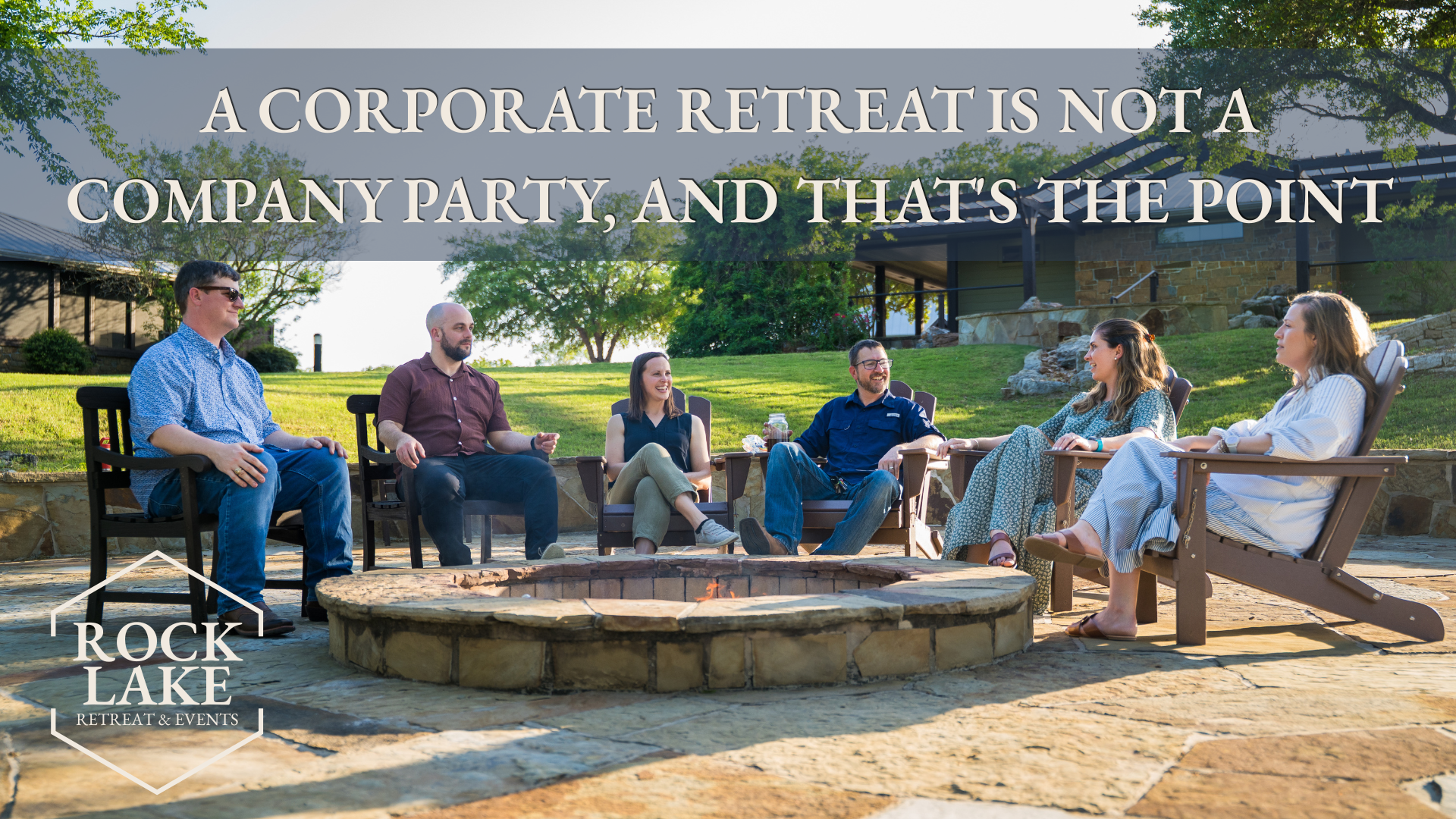
That’s one reason I believe so strongly in getting teams out of their normal environment. A good corporate retreat venue in Texas gives people something they rarely have during a normal workweek: uninterrupted time to think.
What’s interesting is that the most productive conversations often don’t happen during the scheduled meeting sessions. I’ve watched leadership teams spend an entire morning reviewing goals and metrics, then make their biggest breakthrough while standing around the outdoor kitchen waiting for dinner. No presentation. No whiteboard. Just people finally having enough space to talk honestly.
The waterfront pavilion, the covered porches, the quiet moments between meetings, those things aren’t just amenities. They create opportunities for conversations that feel more natural than sitting across a conference table for eight straight hours.
When people hear “retreat,” they sometimes picture games, activities, or team-building exercises. Those can certainly be part of the experience. But the real value usually comes from something much simpler. It’s the opportunity to slow down, step away from the daily noise, and focus on the questions that never seem to get enough attention back at the office.
A company party helps people celebrate where they’ve been.
A retreat helps them decide where they’re going next.