
A two-day retreat sounds like a lot of time until you start planning it. Then suddenly every hour has a strategy session, presentation, breakout, lunch, activity, and another meeting squeezed in somewhere. I’ve seen teams do this with the best intentions. Everyone is traveling, everyone’s busy, and nobody wants to “waste” the opportunity to have the whole team together.
The problem is that people aren’t machines. After several hours of serious discussion, attention drops and conversations get shorter. If you keep adding sessions because there’s technically room on the calendar, you can end up with a retreat that feels more like a conference than an opportunity to actually work together.
Give each day a purpose
Start by deciding what each day is supposed to accomplish rather than building a giant list of topics. If the first day is primarily about strategy and big-picture conversations, let it have some depth. The second day might be better suited for turning those conversations into priorities, responsibilities, and next steps.
That doesn’t mean every session needs to be perfectly planned. It just gives the retreat a direction. I’ve found that teams get more out of a two-day retreat when they aren’t constantly wondering what they’re supposed to be accomplishing next.
Build in time that isn’t a meeting
This is the part people tend to cut first.
Lunch, coffee, outdoor time, and informal conversations aren’t interruptions to the retreat. They’re part of it. A leadership team might spend an hour working through a difficult issue, then continue talking about it while eating lunch or sitting outside. The conversation is different because nobody is staring at the clock or waiting for the next person to present.
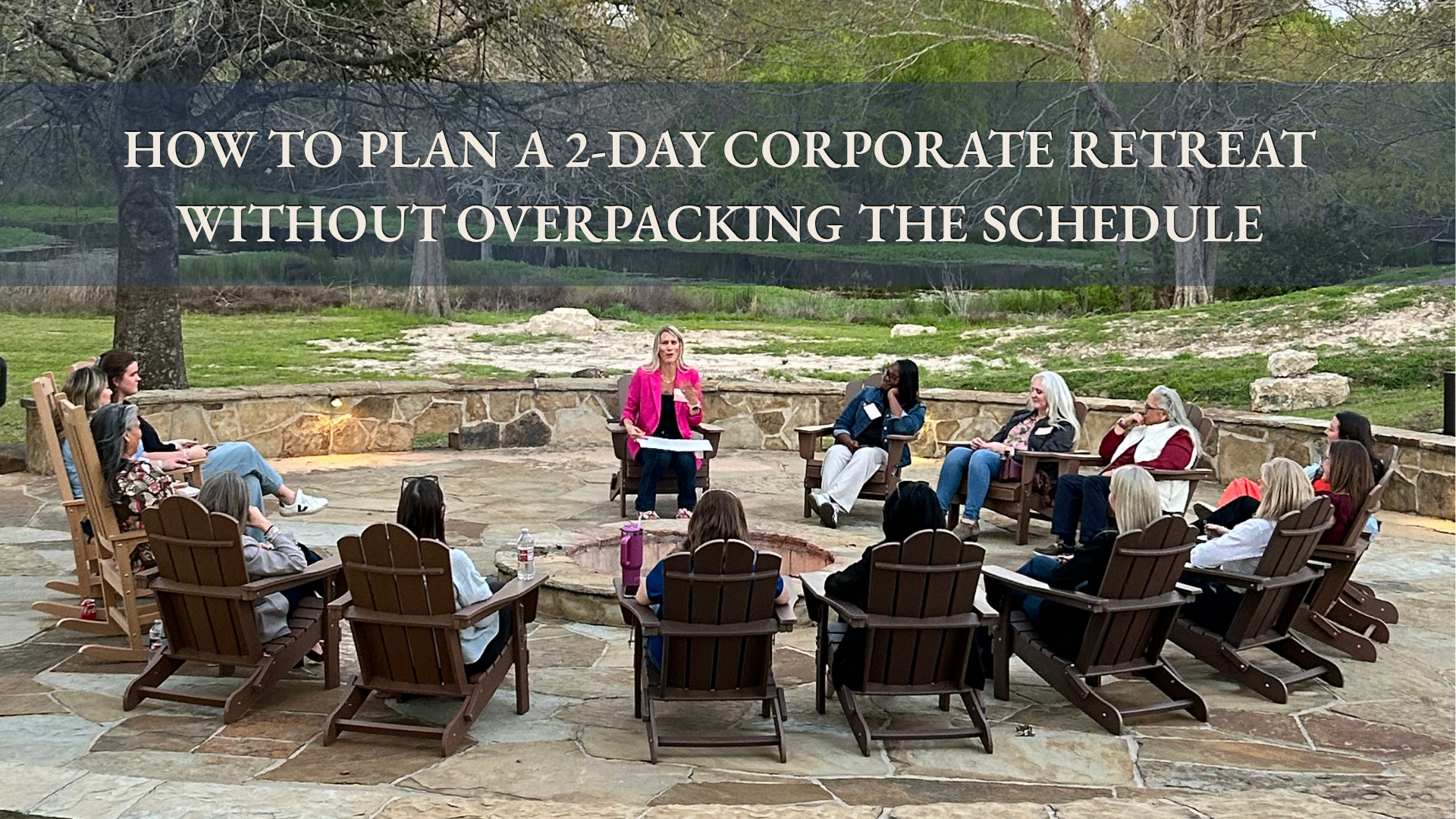
At Rock Lake, having indoor and outdoor spaces gives teams the flexibility to change the pace throughout the day. A group can move from focused discussion to a meal, an activity, or some time outside before coming back together. That change can be surprisingly helpful when you’re asking people to spend two days thinking hard.
Don’t make both days feel the same
There’s no rule that says a two-day corporate retreat needs to look like the same schedule repeated twice. In fact, I’d avoid it.
Put the heavier conversations when people are fresh. Give everyone some room to reset after those discussions. Use the second day to build on what came out of the first instead of starting over with another long list of topics.
If you’re staying overnight, the evening can also be part of the experience without becoming another work session. Dinner, an activity, or simply time together gives people a chance to connect without another presentation waiting for them.
Leave with something useful
The last part of the retreat should answer a simple question: What are we doing differently now?
That might be a short list of priorities, a few decisions that have finally been made, or clear ownership around something that has been causing confusion. You don’t need a twenty-page retreat report. You need everyone to leave knowing what was decided and what happens next.
That’s really what makes a two-day retreat worthwhile. Not how much you managed to fit into the schedule, but whether the team used those two days to have conversations they wouldn’t have had in the middle of a normal workweek.
If you’re planning a corporate retreat in Texas, give yourself permission to leave some space in the schedule. Your team will probably get more done because of it.