Most teams spend a lot of time planning the retreat itself. The agenda gets finalized, meeting topics are organized, and someone usually spends more time than they should tweaking slides the night before. By the time everyone arrives, the focus is usually on what happens once the first session begins.
What often gets overlooked is the evening before the retreat. It can feel like a throwaway window where people arrive, unload bags, find their rooms, and figure out where dinner is happening. But if you handle that evening well, it can quietly set the tone for the entire retreat.
One thing we’ve noticed hosting leadership teams and company retreats is that people rarely arrive fully present. They may be physically at the retreat venue, but mentally they’re still at the office. They’re thinking about the customer email they didn’t answer, the project deadline coming up next week, or the issue that popped up right before they left town. You can usually see the shift happen over the course of the evening. The first conversations are practical: How was the drive? Did everyone find the property okay? What time are we starting tomorrow? That’s normal. People are still carrying the pace of the workday with them.
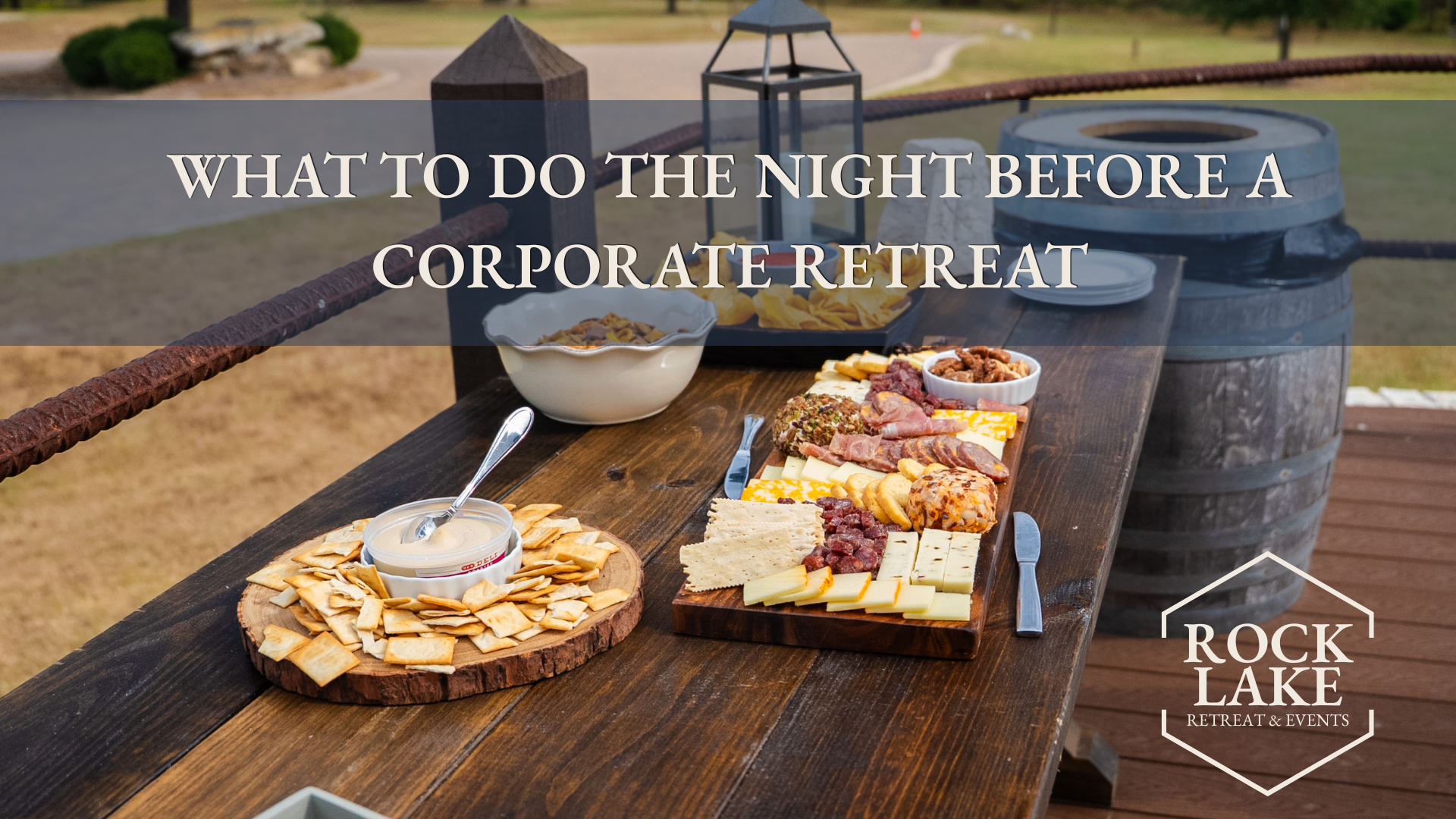
Then dinner starts, and the mood changes a little. The conversation moves away from tasks and projects. Someone shares a story about their family, someone else talks about a recent trip, and people start laughing in that slower, more relaxed way that usually doesn’t happen between back-to-back meetings.
That may not look productive from the outside, but it matters. Trust is the foundation of a productive corporate retreat. Teams that trust each other tend to communicate more openly, challenge ideas more honestly, and have the kind of conversations that actually move things forward.
The night before creates space for that trust to build naturally. Not through an icebreaker. Not through a forced activity. Just through time together without a deadline hanging over every sentence.
This is especially helpful for leadership teams. Most leaders spend plenty of time talking about goals, responsibilities, budgets, and performance. They may work together every day, but that doesn’t mean they’ve had space to connect as people. A relaxed dinner, a walk outside, or a conversation on the porch can do more for the next day’s meeting than another prep email ever could.
The setting plays a role here too. A private corporate retreat venue gives people room to slow down instead of scattering into separate hotel rooms after dinner. Teams can gather around an outdoor kitchen, sit near the water, or keep talking long after the meal is over because nobody is rushing them out of the space.
The next morning usually feels different because of that. Discussions move faster. People are more comfortable speaking up. Leaders are more willing to be candid because the group already feels a little more connected before the first official session starts.
If you’re planning a corporate retreat in Texas, don’t treat the night before like empty time. Treat it as part of the retreat itself. Not for more meetings or more agenda items, but for helping people arrive, settle in, and leave the office behind. A strong retreat rarely begins with the first bullet point on the agenda. More often, it starts the evening before, when people finally have enough space to slow down and reconnect.